


Another important byproduct of building relationships with clients is identifying their key personnel and focusing on their professional development. One of our client’s IT specialists is emerging as their go-to person for their most challenging projects, and we suggested to his management team that he come for a visit since he had never been on site with us before.
We had a good visit for the all the reasons we’ve previously discussed about building personal connections and rapport with our IT team, but here’s another great benefit for us as a company. Key client team personnel are kind of the “chief deputy” for their management team – empowered to make decisions and deploy resources to complete projects and keep things running. And while this IT specialist who came to see us is our client’s deputy, we want him to be our deputy too.
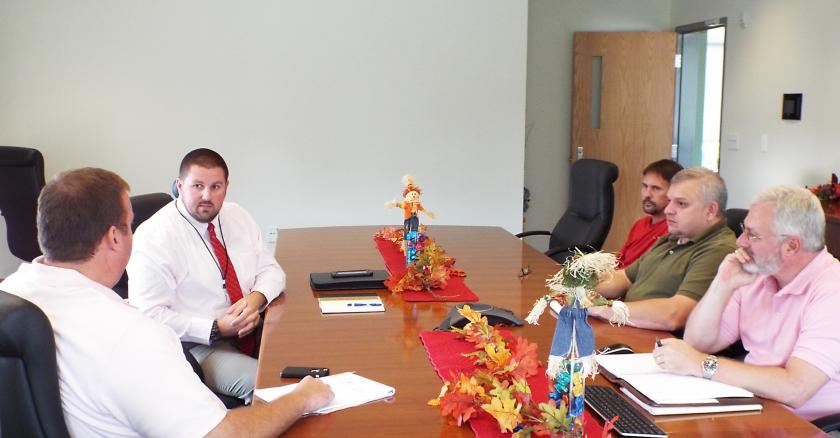
We want this client’s IT specialist to know enough about our systems so they understand what’s going on. We want to involve our clients’ IT specialists in our systems design, development and operation enough so that they can help us during an outage, and keep their management team informed on the ongoing situation and status towards resolution.
In our meetings and interactions with our client’s IT “deputy”, three things quickly became apparent to him. One is that our IT team really does have in-depth knowledge of our systems that is second to none. This is not the level of knowledge that you can just get off the street, but by doing things, again and again, the kind of things that our client’s IT team might only do once or twice in a career. Secondly, our client IT specialist saw firsthand how we’re constantly evaluating new technology that could benefit both of us. Most of our client’s IT staff doesn’t have a lot of time to evaluate new products, so they’ll ask us to test out something they may have seen at a conference or heard about via a colleague. Since our company has a lot of relationships with other technology vendors, we’re able to get access to their products to test and evaluate, and our clients get to look over our shoulders while we do that. Finally, not only do we evaluate technology on behalf of our clients, if it’s a good fit for us, we’ll use it as well. As I like to say, “We eat our own cooking.”
Another point I’d like to make, it isn’t just the client’s IT specialist who learned a lot while he was visiting us. We learned from him as well – for example, we found out that sometimes the client’s branch offices were contacting us directly for support, bypassing their internal IT department. It was somewhat embarrassing for the client’s IT staff to hear about a problem in one of the branches and when they asked how long that problem had been going on, be told that it had been reported to us and resolved weeks ago. Now, our support teams always cross check with our client’s IT team on open issues to see if it’s been previously reported. You’ll also find that being completely transparent with clients that you have a reservoir of goodwill with, that they’ll be transparent with you, too. The reward for being good partners with your clients is that they’ll share with you their strategic plans and programs. Many times, a client’s management team is trying to develop something in a vacuum and would love to have second opinion. Sure, they could hire a consultant for an objective evaluation, but as a client executive once told me: “Consultants are fine, but I want to hear from someone who’s in the boat with me, someone who has a stake in my success.”
So all of these things; building the relationship through face-to-face on-site meetings, at both your office and the client’s office, building up a reservoir of goodwill and trust, identifying and developing client team members who can be your “deputy”, and being transparent in all your interactions, leads to relationships that can weather the occasional rough patch and stand the test of time.